

From DIY Art to Family Photos: How to Create a Personal Gallery Wall
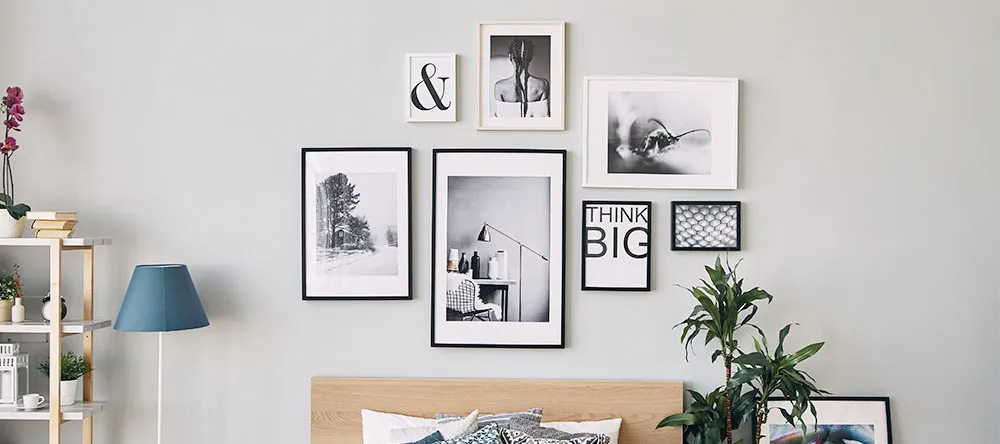
A gallery wall does more than fill an empty space. At its best, it brings together the photographs, artwork and memories that say something about the people who live in a home.
That is why some of the most interesting gallery walls are not built from matching prints bought as a set. Instead, they combine different kinds of meaningful pieces: a favorite paint-by-numbers canvas, family photographs, travel images, children's artwork or a print connected to an important place or occasion.
The challenge is making all those individual pieces feel like they belong together.
Fortunately, a personal gallery wall does not need to be perfectly symmetrical or professionally designed. With a little planning, it is possible to turn a collection of paintings and photographs into wall decor that feels intentional while still retaining its personality.
Start With a Story, Not a Layout
Before measuring frames or deciding where the first nail should go, think about what the wall is meant to represent.
A family photo wall might focus on generations, celebrations and everyday moments. A travel-inspired gallery could combine landscape photography with artwork created during or inspired by different trips. Another wall might simply collect favorite pieces that share a similar mood.
Having a loose theme makes choosing artwork much easier.
The theme does not have to be obvious to anyone else. It simply needs to provide enough connection between the pieces to stop the finished gallery from feeling random.
Possible themes include:
- Family memories
- Favorite travel destinations
- Nature and landscapes
- Weddings and anniversaries
- Children's artwork
- Pets
- Seasonal memories
- A particular color palette
- Handmade and DIY wall art
Once the theme is established, start gathering more pieces than you expect to use. Editing a larger collection is usually easier than trying to fill gaps later.
Mix Handmade Art With Personal Photography
One of the easiest ways to give a gallery wall character is to combine different types of artwork.
A finished paint-by-numbers canvas can work alongside photography surprisingly well. Both are visual interpretations of something meaningful, but they bring different textures to the wall.
For example, a painted landscape might sit beside a photograph taken during a memorable vacation. A floral canvas could be paired with family photographs that contain similar colors. An animal painting could become the focal point of a wall featuring favorite pet photos.
The connection can be emotional rather than visual.
This approach also means the gallery wall can continue evolving. New photographs, paintings and personal milestones can be added over time rather than requiring the entire display to be redesigned.
Turn Favorite Photos Into Wall Art
Digital photo libraries often contain thousands of images that are rarely seen outside a phone or computer. A gallery wall provides an opportunity to bring a small number of those photographs back into everyday life.
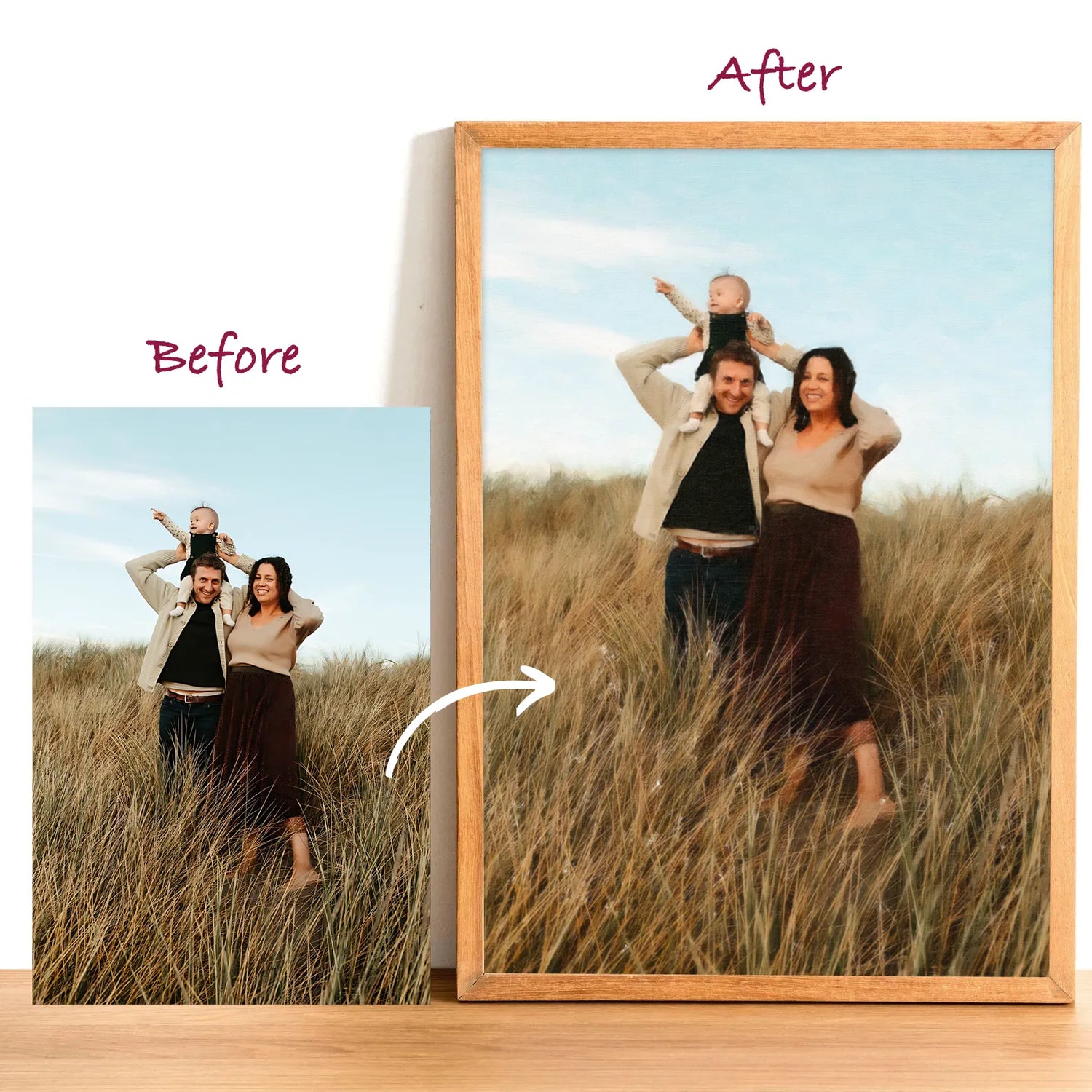
Printing photographs on canvas is one way to give personal images more visual weight alongside painted artwork.
Well-produced high quality canvas prints can help photographs feel like part of the room rather than simply enlarged snapshots. Canvas also introduces texture, which can make photographic pieces sit comfortably beside paintings and other handmade art.
When selecting photos for printing, prioritize images with clear subjects and strong composition. Pictures with some space around the main subject are often easier to crop into different canvas formats.
It is also worth thinking about color. Photographs do not have to match exactly, but repeating two or three colors across the gallery can create a subtle sense of unity.
Black-and-white photography is another useful option when the original images contain very different colors.
Choose One Piece to Anchor the Gallery
Most successful gallery walls have a visual starting point.
This might be the largest canvas, the most colorful painting or the photograph with the greatest personal significance.
Place this piece first and build outward.
The anchor does not necessarily need to sit in the exact center of the arrangement. Slightly off-center layouts can feel more relaxed and are often easier to expand later.
Once the main artwork is chosen, arrange smaller pieces around it. Try to create balance rather than perfect symmetry. If one side contains a large dark image, for example, the opposite side might need two smaller pieces or another visually strong element.
Plan the Gallery Wall Before Hanging Anything
One of the simplest gallery wall mistakes is starting with a hammer before knowing where everything will go.
Instead, test the arrangement first.
Lay all the pieces on the floor and experiment with different combinations. Photograph each version so they can be compared later.
Another useful method is to cut paper templates matching the dimensions of every frame or canvas. Tape these templates to the wall using painter's tape. This makes it possible to adjust spacing and placement without creating unnecessary holes.
As a general visual rule, consistent spacing helps a mixed gallery feel cohesive. The artwork itself can vary considerably when the gaps between pieces remain relatively uniform.
Use Size and Orientation to Create Rhythm
A gallery wall made entirely from identical rectangles can look neat, but mixing formats often creates more energy.
Try combining:
- Portrait and landscape photographs
- Square canvas prints
- Larger statement pieces
- Small supporting artworks
- Multi-image collages
Different orientations encourage the eye to move across the display.
If several photographs are being turned into canvas wall art, services such as CANVASDISCOUNT offer individual photo canvases as well as collage and wall-display formats. Its canvas prints use polyester canvas stretched over a wooden frame, with additional framing options available for selected formats.
Using a combination of sizes can be particularly useful when building a gallery around an existing painting because smaller photographic pieces can fill the spaces around it without competing for attention.
Create Cohesion Without Making Everything Match
A personal gallery wall should look connected, but it does not need to look uniform.
Repeating one or two elements is usually enough.
That might mean using similar frame colors, maintaining consistent spacing or choosing photographs with related tones. Another approach is to repeat a color from a painting elsewhere in the arrangement.
For example, if a DIY canvas contains blue and green tones, look for photographs featuring sky, water or greenery. These subtle visual connections can tie very different types of artwork together.
Frames can also create unity. Black, white and natural wood are flexible choices because they work with many interior styles.
Leave Space for the Gallery Wall to Grow
A gallery wall does not need to be finished forever.
In fact, leaving a little room around the arrangement can make the display more useful over time. A new family photograph, another finished canvas or artwork from a future trip can eventually become part of the collection.
That evolving quality is what separates a truly personal gallery wall from purely decorative wall art.
The strongest displays are rarely about following a strict design formula. They are about selecting pieces worth seeing every day and arranging them in a way that makes the collection feel intentional.
Whether the wall begins with a favorite painting, a family photograph or a piece of DIY art, the same principle applies: start with something meaningful and build around it.
Over time, the gallery becomes more than home decor. It becomes a visual record of the people, places and creative moments that matter most.

 https://1001canvas.com